WATCH & RELEASE
THE MONTHLY 25 / DECEMBER 2026
Emerging & Distinctive Voices
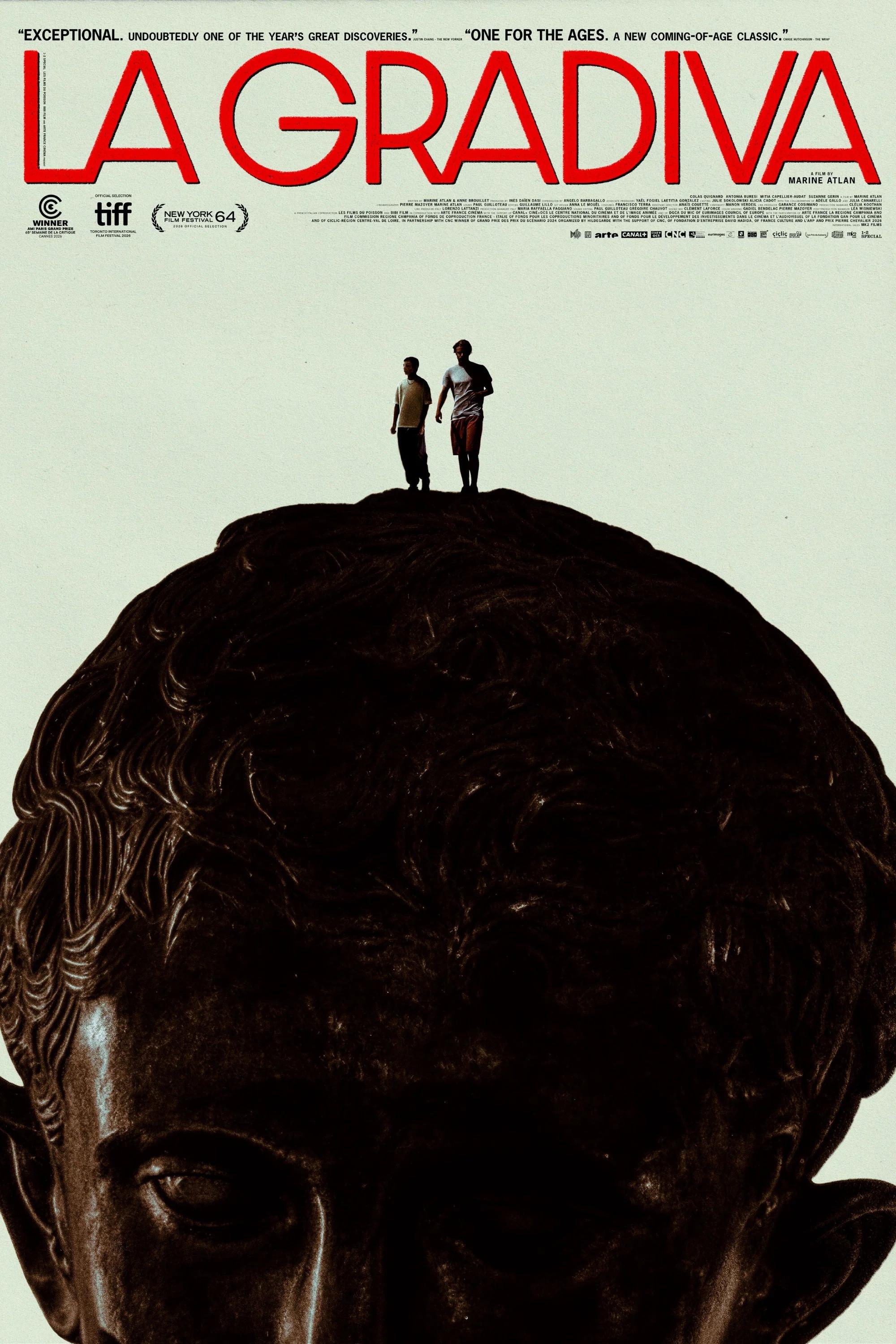
La Gradiva
A group of French high school students travels to Naples and Pompeii, where an educational excursion becomes an unexpected confrontation with the uncertainties of growing up. Among them are Toni, a restless young man preoccupied with his family's supposed aristocratic origins; James, his charismatic and self-assured friend; and Suzanne, an observant student struggling with feelings of isolation. Accompanied by their Latin teacher, Madame Mercier, the teenagers explore ancient ruins and encounter the remnants of lives interrupted by catastrophe. Against this landscape of preserved history, their own desires, rivalries, and insecurities intensify, pushing friendships and identities toward a moment of irreversible change.
FILM AT A GLANCE
PRINCIPAL CAST
Colas Quignard · Suzanne Gerin · Mitia Capellier-Audat · Antonia Buresi · Rouge Isaac
DIRECTOR
Marine Atlan
SCREENPLAY
Marine Atlan · Anne Brouillet
CINEMATOGRAPHY
Pierre Mazoyer · Marine Atlan
PRODUCTION DESIGN
Anna Le Mouël
ORIGINAL SCORE
Jonas Atlan
DISTRIBUTOR
1-2 Special
THE STEADIED PERSPECTIVE
THE STEADIED PERSPECTIVE
The transition from adolescence to adulthood is often described as a period of discovery, but it can be equally defined by uncertainty, contradiction, and the unsettling realization that other people experience the world differently. In La Gradiva, filmmaker Marine Atlan places those tensions against the ruins of Pompeii, where the permanence of history stands in striking contrast to the volatility of youth. Atlan's feature directorial debut follows a group of French teenagers whose school trip gradually becomes an exploration of attraction, identity, class, and belonging. The students arrive with their own insecurities and expectations, but the unfamiliar surroundings create opportunities for those feelings to emerge in unpredictable ways. Their relationships shift as they attempt to understand themselves and negotiate the complicated social hierarchies of their generation. The setting provides more than a picturesque backdrop. Pompeii, with its preserved bodies and remnants of everyday life, offers a reminder of how suddenly ordinary existence can be transformed. For characters standing at the beginning of adulthood, the encounter with an ancient catastrophe introduces a sense of mortality and historical perspective that complicates their immediate concerns. The contrast between the permanence of the ruins and the fleeting intensity of adolescence gives the story an unusually expansive emotional frame. Atlan, an established cinematographer making her first feature as director, shares photography duties with Pierre Mazoyer. Her experience behind the camera is central to the film's visual approach, which combines close observation of youthful behavior with the architecture, landscapes, and historical textures of southern Italy. The result, as described in its festival reception, is a coming-of-age drama that moves between naturalism and a more expressive, almost mythic sensibility. The film's recognition at Cannes Critics' Week marks an impressive beginning for Atlan as a feature filmmaker. More importantly, La Gradiva appears to approach its young characters without reducing them to familiar adolescent types. Their mistakes, desires, and emotional contradictions are treated as consequential experiences rather than temporary distractions on the way to adulthood. In bringing the restless lives of contemporary teenagers into contact with a civilization preserved by disaster, La Gradiva suggests that growing up involves more than discovering who we are. It also means confronting the fragility of the world we are only beginning to understand.